Astrid Busser-Casas, AI VFX Specialist – Metaphysic.AI
Astrid has a long career in compositing, working on some iconic movies and TV shows along the way. As an alumni of MPC, The Mill, Framestore, DNEG, WETA and Scanline, Astrid has travelled the world. With a natural curiosity for people, cultures, art and technology, moving into her latest role in AI has been a natural career step.
Read on to find out more about Astrid’s career journey, challenges and defining (and organic!) moments that have helped her along the way.
Did you have a clear idea as to the type of career you wanted from an early age?
I knew I wanted to do something creative. I always enjoyed art, photography and computers from an early age. My career has largely been a classic case of that saying “when one door closes, another door opens”.
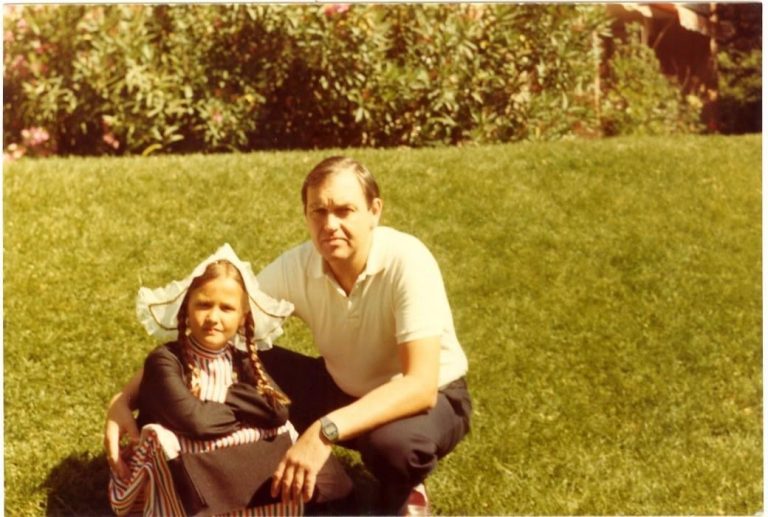
My dad got me my first camera at 8 years old and a proper reflex camera at 11. I had my own makeshift dark room in the bathroom, and at school, and I’d spend hours in them.
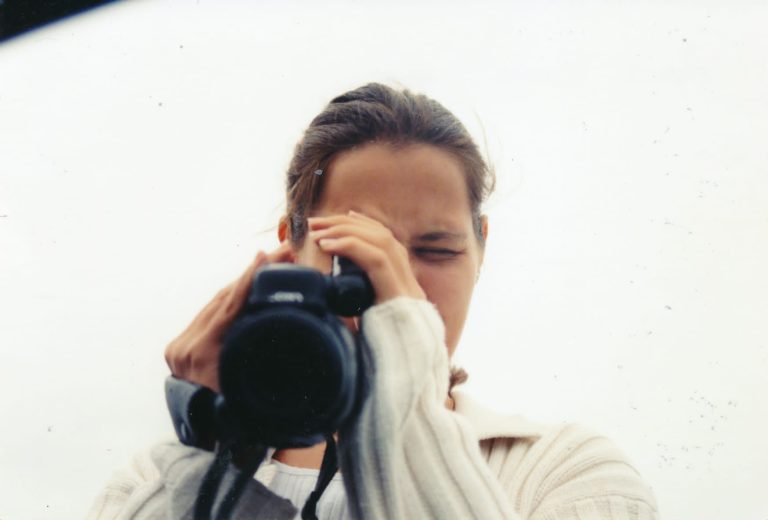
I used to manipulate the images while taking the photos by doing double exposures, or when printing them. Although I didn’t know it then, by exposing different areas and trying to create effects, this is what I would be doing for a living in the future.
“I used to spend a lot of time looking at the world, I still do. How light falls, how rain drops, how people move, how things change. I’ve always been fascinated by life and all within it.”
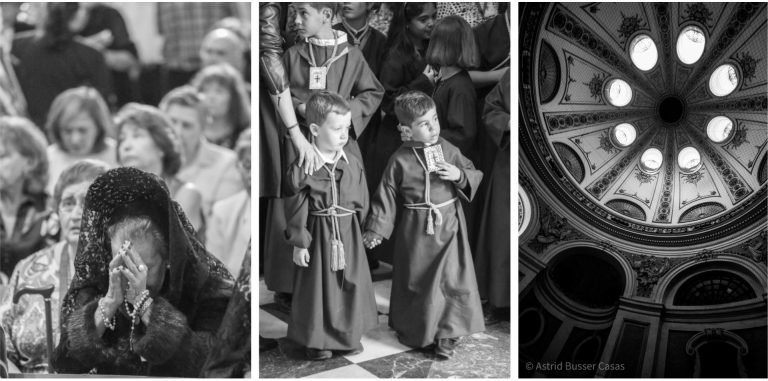
Astrid Busser-Casas Photography
I also loved science, computers and solving problems. I always found when someone would say it couldn’t be done it made me want to try harder to solve a problem, to prove to myself it could be done and that I could do it. My dad had a Commodore 64 at home and he got me some children’s ‘BASIC’ books to learn from. I loved doing things in ‘Word Perfect’, which at the time I didn’t realise, but was simple coding.
What could I do with all this? Initially I thought I’d love to capture life and work in film and television, which is what I studied at University. But once there I was introduced to some new computer tools I had never used, which was a sound and editing system. I’d learnt it on my own and became the person people came to for help to use it.
After learning about sound and image editing I then became very interested and fascinated in how to manipulate images. This is when I started using ‘After Effects’ and ‘Photoshop’.
I was still sure I was going to do film and television production but soon learned about visual effects at the course Bournemouth University offered. I managed to secure a place for their ‘Masters in Digital Visual Effects’ where I was selected via a grant through a bank, which helped me immensely. So off to England I went.
You were at Uni when computers first started being used, which must have been incredible to witness. Do you remember people’s reactions to this new technology and what was the general reaction?
People were definitely afraid of it at first. Everybody loves to hate what they don’t understand, but I’ve always been curious and learned about what I don’t understand, so I don’t have that fear. It’s the same with travelling, we travelled so much and so there was much to be curious about!
With AI, it’s a similar experience, but I don’t think there’s anything people should be scared of.
Who have been or are your biggest inspirations or role models in terms of your career?
I remember my dad taking photos of the family, he carried his camera everywhere, always trying to capture moments. He also worked with ‘Electron Microscopes’ so interesting imagery was always around us and I used to develop some of the photos my dad used to take for them. He has been a great inspiration and source for bettering myself.
Work-wise I have been influenced by many artists, painters, photographers. I always see myself as a visual artist more than a technical one. Within VFX there is a clear divide between these two disciplines. I’m always learning about the more mathematical and technical aspects of the job.
What made you decide to focus on VFX?
In truth I feel it was by chance. It felt like the natural thing to do after my degree in Film and TV. I got to love working with the tools and the computers so much that I wanted to carry on with it and see where it led me.
I learned a lot more about coding, but one thing I found was a lot of people on my course were far more technical than me and not many were as artistic. I got to learn a lot during that year. I soon realised I didn’t necessarily want to tell stories but rather mimic reality through the capabilities of the computers we had at the time. The good thing about having come from an artistic background is a lot of the things you need for compositing I had already learnt, like observing the world and trying to interpret reality through the tools we used.
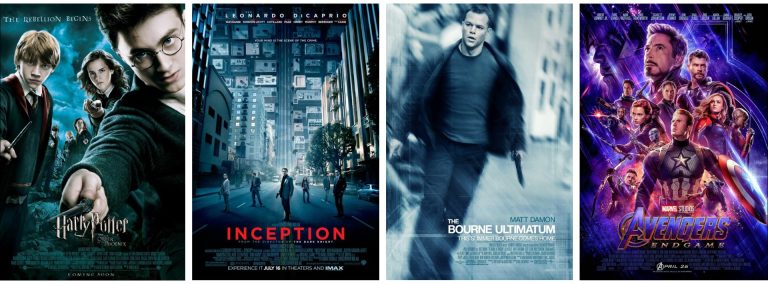
Left to right: The Bourne Ultimatum, Avengers Endgame, Harry Potter and the Order of the Phoenix, Inception – some of the epic movies Astrid worked on as Compositor
Can you describe your career path and what led you to the AI VFX specialist role you are in now?
We were in Canada but my mother became sick so we had to move back to Spain. I’d already been looking into AI when Sophie [PXL’s Founder] contacted me about the role at Metaphysic.AI. A lot of the tools we use in VFX are already using AI. There is so much media about how awful AI is, but it will, and is, changing how we work.
I have always tried to do what I love, what feels right. I don’t know if it’s due to instinct, sixth sense or the need to express myself through art, but I thank everyone for the opportunities they have given me.
“I have been building my career little by little, due to a chain of events, or fortunate coincidences, always chasing for the things that make me happy, which hasn’t been a bad strategy.”
AI is the natural next step in this puzzle, and it hasn’t disappointed me so far.
What were some of the biggest challenges you encountered early in your career and how did you overcome them?
I guess looking back now I can say feeling insecure was a big challenge. Feeling like you don’t belong. Why did I get the job? Did I deserve it? Was I good enough to pull it off? I hear this is called ‘imposter syndrome’ and that almost everyone suffers from it at some point.
“I had some bad experiences along the way and I lost confidence to the point where I actually left the industry for two years. I realised much later that I was giving too much thought to these instances and learned to be confident in myself and my abilities.”
When I first started there weren’t that many women on the floor. There were lots of women producers but not a lot in the comp department. So trying to sound like you know what you’re talking about was always a challenge. This is totally inside my head of-course, but it has and is something I feel I have to deal with every day.
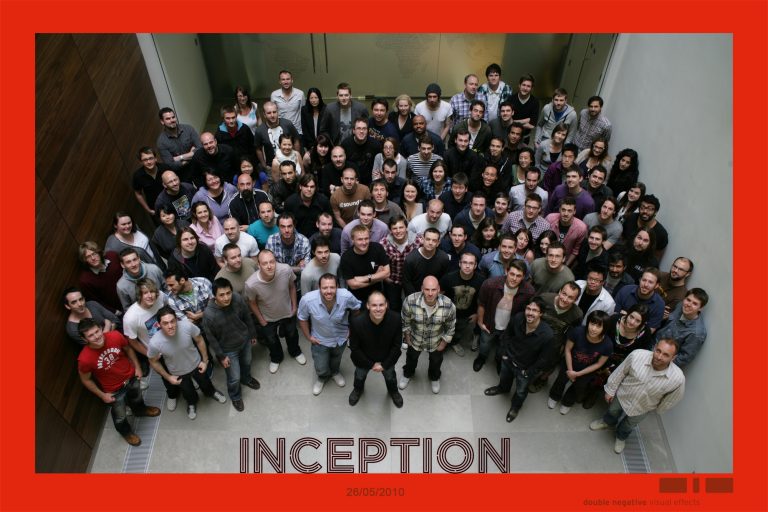
DNEG’s ‘Inception’ team from 2011
After so many years doing this you learn to deal with it, but it hasn’t fully gone away, I must admit. When you’re constantly learning new things you’re constantly challenging yourself. Keeping yourself on your toes and always engaged.
I also have to add that I wouldn’t be where I am without the constant support of my other half Ivan, he has been a very flexible and supportive partner. He virtually gave up his career to support my dreams and take care of the children and build a safe and secure home environment. This is something that is happening more and more where families are inverted. It has allowed me to change continents, countries and cities, have amazing experiences and meet lovely individuals through these experiences. We have managed to remain friends with a lot of these individuals through our journeys.
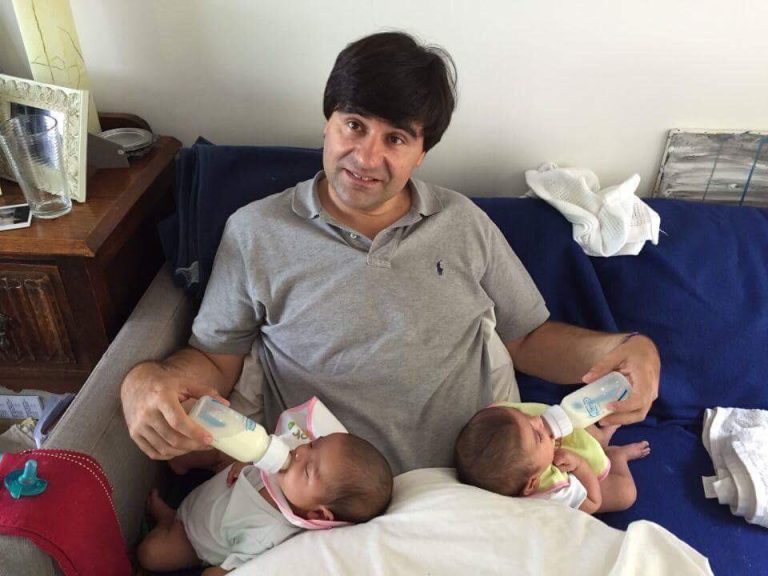
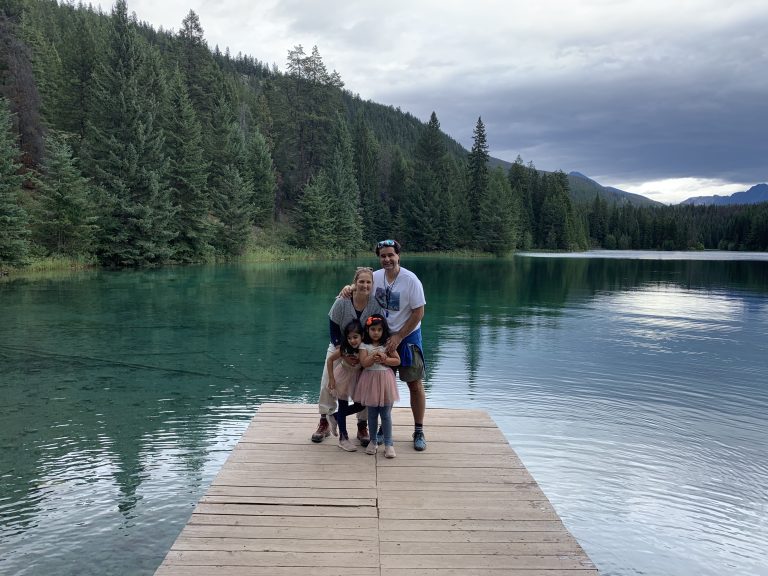
Astrid’s husband with their twins
The benefits of “Working from home” is allowing me to be part of daily life with the children. Be part of their daily routine and not feel like an absent parent. This is something which structures my family and strengthens our girls for the future.
You have held a number of leadership roles including the role you are in now, what experiences have been the most defining and helped you develop your leadership style today?
I feel really grateful for all the opportunities I have been given through the years and often wondered why they would entrust such faith in me. But I have learnt to appreciate that I have a certain calm demeanour which seems to help amongst all the chaos within a project.
Travelling the world for work has certainly conditioned me to look at the world in a different way. I’m always curious about other cultures, people and how they think. I found by living in other countries you learn by osmosis about them, about how they work and how you can get the best out of people with mutual respect and tolerance.
I feel I learnt a lot from Matt Holborn, Alex Hope, Paul Franklin and Matt Plummer, whilst at DNEG. They embodied for me what keeping calm under a stressful situation would look like. I learnt a lot of this during ‘Inception’. It was, in a way, a turning point in my career. It was my first time leading a bigger team of artists and I felt we did really well. Paul was always extremely encouraging and calm and in turn that calmness trickled down to the rest of the team.
I have tried to mimic this in my roles as supervisor through the years. Always calm under pressure, positive, encouraging and making sure the team is on board and are taken care of. Always being there. First in, last out (when possible of course).
What do you think makes a good leader?
I think, as with parenting, you are the “example for everyone else”. You are the one people look at for pointers. I have also come to realise I don’t need to know everything. I just need to make sure I get the right people together and get them well organised. Make sure clear guides, goals and strategies are made. The more supported people feel, the better they perform. The more organised a project is, the less room for error. I love to make info pages for the different projects, so the information is there.
“I think listening to your team is very important. Making sure they feel supported and able to grow. Able to learn and able to speak their mind when there are issues. Talking is very important to clear up problems between people and the best way to avoid misunderstandings.”
One thing I was told a long time ago by Matt was “just be yourself”. I’ve been doing this all along.
You are now an AI VFX Specialist, what does this mean and what are your main responsibilities in your role?
I guess it’s a glorified Comp DFX supervisor. I love my new role as I get to do a lot of things you wouldn’t get to do in bigger companies. A lot of things are automated and under the hood in larger companies.
I am currently very hands on with a lot more technical pipeline related things, and the development of tools, which I didn’t really get to do before. Besides helping lead our amazing comp team, which I really enjoy, I like to make sure all team members are ok and everyone is feeling supported.
It’s a totally different mindset, working in AI, and I’m learning more now than ever before.
How does this pipeline compare with others you’ve used?
It still revolves around the image, but with ours there’s a lot of going back to AI. However, comp always finishes the final image. Everything is very new and there’s a lot we’re working on which we’ll share soon and I believe will really help educate people on what we’re doing with AI. Watch this space!
What have been the biggest learning areas in terms of working with an AI company?
This last year working with AI has opened my eyes to so many new possibilities. Not just film VFX but also the music industry, TV, commercials and so many other areas.
I have also broadened my knowledge technically in many ways. It’s a totally different pipeline so it’s great to broaden one’s horizons once again. I feel one needs to always test their own limitations, so you always fill the “curiosity power pack”.
We are in uncharted waters at the moment and lots of interesting and colourful language is being used about AI. For me it’s another tool to be used within VFX. It makes our work a lot faster and new things are emerging on the back of everything we develop.
Should artists be worried about AI or look at how to utilise it in their own roles?
I don’t think we should be afraid of it, on the contrary, it really does help our work. It helps to be quicker. I found my mindset in the way I see compositing has changed. It’s like standing on a table and seeing the world from a different perspective. The world is the same, it’s just a different view.
“Change is never easy, but we have changed from ‘Illusion’ to ‘Shake’ to ‘Nuke’ without a problem. We can embrace what AI has to offer.”
I think artists should start learning AI tools within Nuke, and they’ll find it will help them be better artists. The “art” is still there, it’s the same, but the tools might have changed a little.
What advice would you give to companies and artists looking to utilise AI?
Go for it, learn them, use them and try to implement them into your workflows. It will really help you in the long run. The art of filmmaking and storytelling will always be there, but we are exploring possibilities that weren’t possible before. Just for this it’s worth embracing. There will always be criticism and rejection for things we don’t understand. I guess this is what life is.
What type of experience has been invaluable in your career experience previously to the role you are doing now?
I have travelled and lived abroad for 30 years in countries including Holland, England, New Zealand, India, Canada and Spain. Having this experience for work has really opened my mind to the world. A world of possibilities. You realise there are no boundaries. We all do our work and want the same things. You learn each country and each society has nuances. You need to learn that each culture has its peculiarity. What makes them unique? Learn what these are and treat people with respect and they’ll respect you.
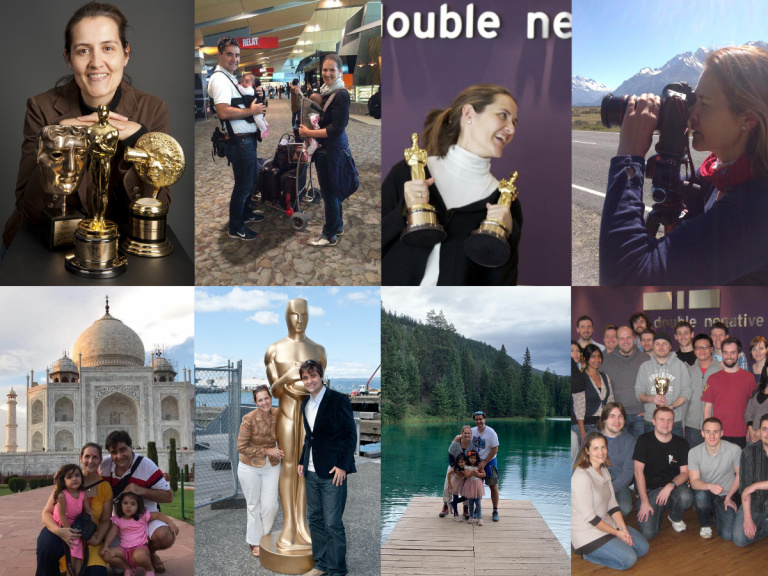
Being a parent has been invaluable for me too because this puts things in perspective and makes a lot of self doubt go away. It teaches you priorities. Specifically, to use your time wisely. Help others but make sure you are not abused.
Winning the VES Outstanding Compositing award for Inception was a major achievement for me, together with Scott Pritchard, George Zwier and Jan Maroske.
Negative experiences:
I’ve had people…
- …say I’m too calm like it’s a bad thing
- …criticise the way I speak
- …say I’m too slow
- …say my voice is too low and I’ll get nowhere if I don’t change
- …say I’m fake and it’s impossible to be so nice (go figure)
Positive experiences:
I’ve had people…
- …say I calm the room and give a sense of peace
- …tell me I’m fast at work and need to slow down
- …tell me I’m great at helping others
- …tell me I have a calming voice and tend to relax others
- …tell me I have a lot of patience and I’m great at teaching others
So I have learnt through the years I can never please everyone, and I don’t have to. I want to carry on being me and whoever doesn’t like it doesn’t have to. The world is huge.
How do you measure the success of a project, both from a technical and creative standpoint?
The feeling of simplicity and cohesion, like a train running smoothly on the tracks. A happy, curious and positive crew is for me the sign of a good project. From a technical standpoint if the project is organised well and everyone helps each other it will run on its own.
There are always issues to iron out, but there needs to be a peacemaker amongst the chaos.
You need the more technical people in place as well as the more artistic ones. There has to be a balance for the project to progress well.
A lot of one thing will tilt the boat over.