Chris Clough, Freelance 3D Modeller
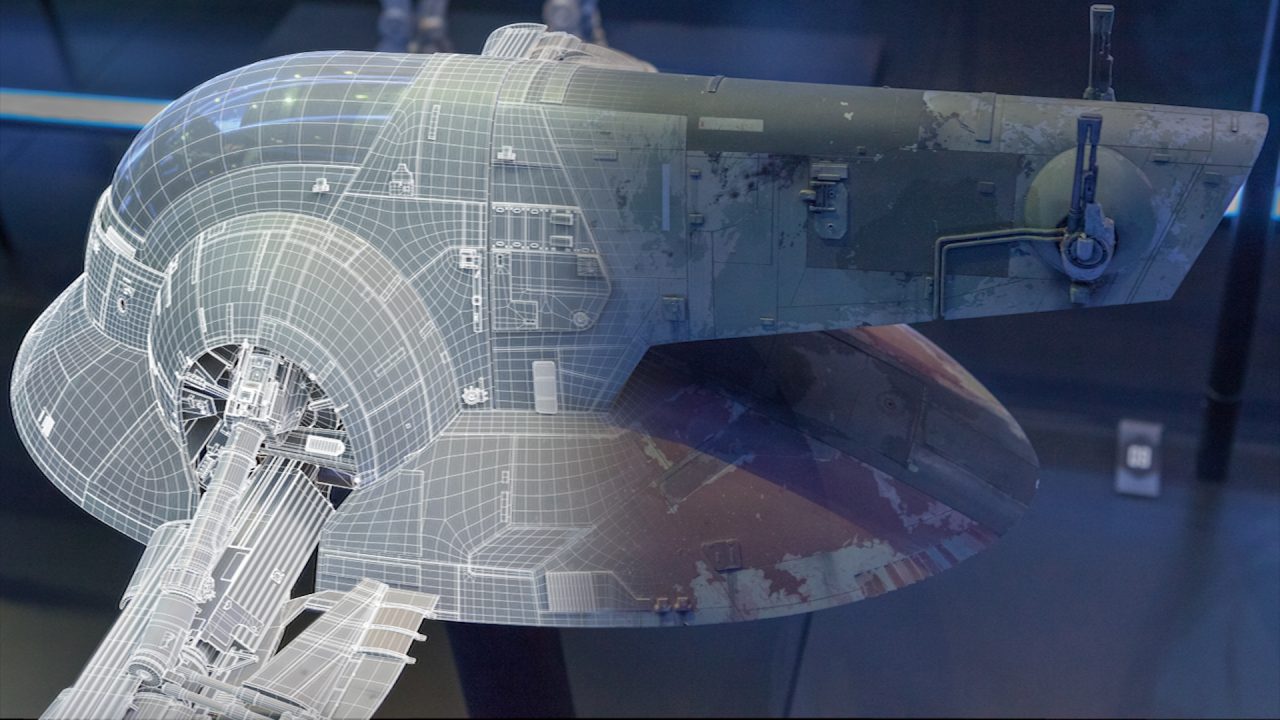
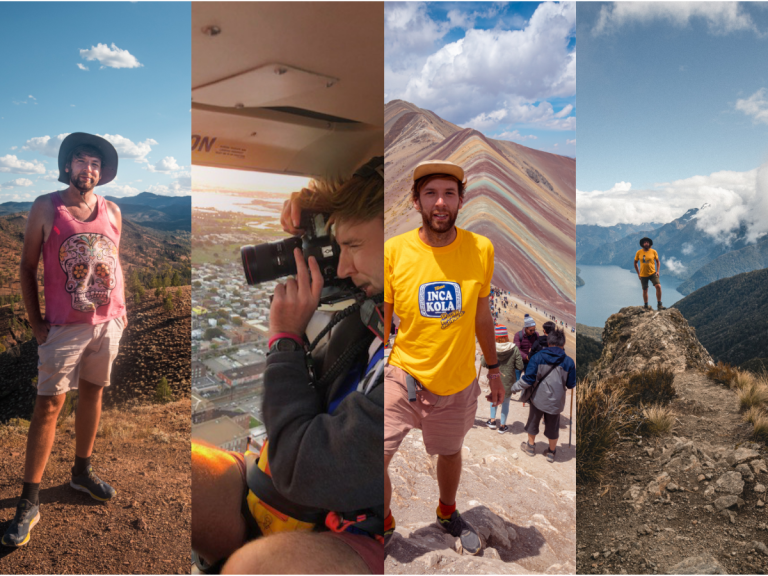
PXL placed 3D Modeller, Chris Clough, into his first advertising role at Selected Works. We invited him to talk about his career path, how he found the transition from film into advertising, and the differences in working in smaller teams and projects.
Take us back to the start: when did you realise that you wanted a career in VFX and what happened next?
I’ve always been passionate about films. From a very early age, I used to love watching reruns of the James Bond and Indiana Jones films on TV; I suppose I loved the escapism; being transported to exotic, far-away lands though the screen, away from the mundanity of everyday life. So I always knew my dream was to work in something to do with filmmaking.
In high school, I made a few low-budget films, with my friends dressed up as soldiers with toy guns, running around the disused quarry near my home. They were really awful films, but they cemented my love and interest in the filmmaking process. I think I would have preferred to become a director or cameraman, but I decided to pursue a career in VFX because of the arithmetic of production crew sizes; I figured my chances of getting to work on big Hollywood films would be greater when there are often hundreds of VFX artists on the biggest films, and usually only one director. I applied to Bournemouth University, which offered one of the first degrees in Computer Animation in the UK, and the rest is history.
There are many different career paths within VFX, what made you decide to focus on modelling?
I just fell into modelling by chance really. My degree was very wide-ranging, covering all aspects of the VFX process, from modelling, animation and rendering, all the way through to compositing. I would have been very happy working in any of these disciplines. My first break in the industry came when I was offered an entry-level job as a Data Operator/Render Wrangler at Cinesite in London. There, I had the option to undertake training in matchmoving, rotoscoping or modelling, and I chose modelling as it seemed like the most creative of the three. After months of practising under the supervision of more experienced artists, I was offered my first production modeller role on Disney’s ‘John Carter’.
Who and/or what have been your core inspirations over the years?
As much as I loved James Bond and Indiana Jones as a child, my favourite franchise as I’ve grown older is undoubtedly Star Wars. I just love the designs and aesthetics of the spaceships and planets, and George Lucas’s vision for a “Used Universe” that’s dirty, grungy and really feels lived-in. The miniatures in the earlier films were stunning in the level of detail, and Doug Chiang’s concepts from Episode 1 onwards beautifully expand the galaxy in a consistent visual style.
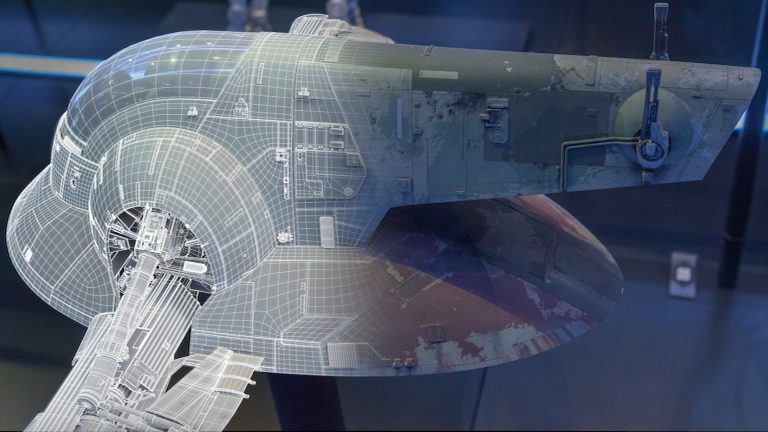
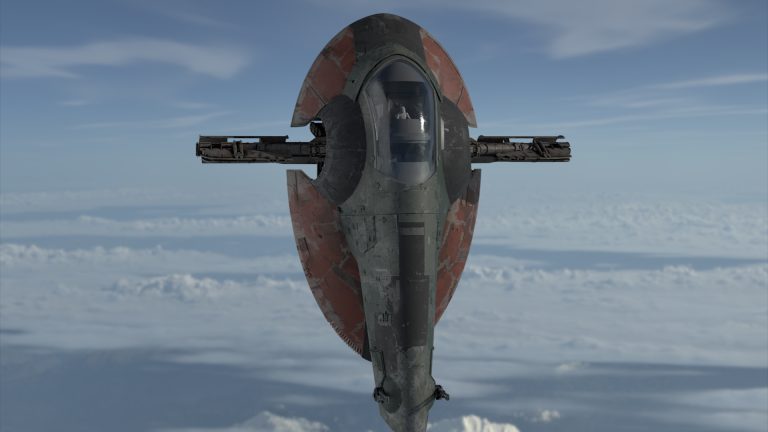
I often refer to Star Wars designs for inspiration in my own work, and my favourite personal project has been modelling my own version of Boba Fett’s ship, from my own photographs, after I saw the original miniature in an exhibition in London.
Tell us about a typical ‘day in the life of’ a modeller working on a project…
As a modeller, I’m often juggling a few different assets at the same time. Each model starts with collecting reference materials, which could be photos from the internet, concept art, blueprints or photos and Lidar scans from the set. Next, I’ll do a low-resolution block-out of the model, to establish the proportions of the main forms, and then gradually add more detail where I think it’s needed.
We’ll often have daily review sessions with lead artists and supervisors, aptly-named “Dailies”, where we’ll present our work, and discuss the next steps to be taken and whether the detail is sufficient. Once a model is approved by the supervisor, we’ll hand it over to the next artists in the pipeline, which are often Lookdev, Rigging and Layout.
You’ve been working in the VFX industry for 15 years now, what core changes or evolutions have you seen during that time?
The software we use is constantly evolving, which can be challenging to keep up with at times. When I first started, Shake was the industry standard for compositing, before Nuke became ubiquitous. Most companies’ pipelines were based around Maya for scene assembly, lighting and rendering, whereas now it seems like Houdini is taking over for core pipeline tasks (though I still mostly use Maya for modelling). There’s also been a big shift toward Realtime and GPU rendering, which allows for faster iterations, with Unreal Engine and Karma XPU now commonplace. We’re now waiting with bated breath to see how AI is going to revolutionise (or completely destroy) the industry.
Working from home is another big change, which was unthinkable in 2019 for security reasons, but became a necessity during the pandemic.
“Some companies are calling staff back into the office now, but I hope that WFH is here to stay at some others, as it saves commuting time and company overheads, offers more flexibility, and generally a better quality of life not being tied into the London rat-race.”
And what have been your personal highlights so far?
Having the opportunity to live and work overseas has been pretty great. I spent three years working at Framestore in Montreal and two years “down under” at Rising Sun Pictures in Adelaide. I’ve always been passionate about travel and seeing different ways of life, so it was great to experience the lifestyles in those cities, as well as travelling more widely throughout the Americas and the South Pacific while based there.
In terms of projects I’ve worked on, I have two highlights that stand out. The first was working on Alfonso Cuaron’s ‘Gravity’ with the team at Framestore in London. This was a groundbreaking project which pioneered a lot of new technology, including the use of LED lighting volumes (which later became popular thanks to Disney’s ‘The Mandalorian’). We won the Oscar and BAFTA for our VFX work on that project – or more accurately, four of the supervisors did, but it was very much a team effort!
The other highlight was getting to work on the latest instalment of the Indiana Jones film series, “The Dial of Destiny” with the team at Rising Sun Pictures. As I mentioned earlier, the original Indiana Jones films were a huge influence during my formative years, so being able to contribute to the franchise, and see my work featured prominently on screen was really something special. 10-year-old Chris would be bursting with pride!
You recently made the leap into working on a project in advertising. How did you find the transition from working in film VFX? What was different about it and did you learn anything new?
I got my first role in advertising after being placed by PXL Talent on a project with Selected Works for BET365, which came at a great time for me, while there’s still not a lot of film VFX work around.
“I found the transition very straight-forward; although I was stepping into more of a generalist role, I was only taking on tasks I was competent in, with software I knew well, so it was a great fit in that respect. My job was to model and texture a Formula 1-style racetrack environment.”
The main difference in advertising was the size of the team, which was much smaller than on a typical film. This means everyone has to be more of a generalist. In films, you’d often have 3 or 4 modellers working on a single environment like the one I built, who would pass models over to a team of texture/lookdev artists, and then a layout artist would assemble the individual components into a complete environment, whereas I did all of that by myself on this project. This was a nice way to work, because it meant I had a lot more autonomy than I typically would on a film project – I could make decisions myself about what assets to put where, and then add detail to the models and textures accordingly. I worked under a great 3D Lead, Mickey O’Donoghue, who supervised my work and occasionally steered it in a certain direction, whilst giving me a lot of creative freedom.
The challenge with this way of working was juggling even more assets simultaneously (from grandstands to fences, crash barriers, and dozens of smaller set dressings), all of which needed modelling, texturing and laying out. It was a lot to keep track of, so I had to be organised and methodical in my approach.
What skills did you find were the most useful when working in advertising and what advice would you give to any other Film VFX artists looking to work in this area?
The main advice I would give is to become more of a generalist, and try to learn some new skills and techniques that sit well alongside the skills you have already.
In films, it’s very easy to get pigeon-holed into a specific, niche role. As a modeller, I’d often be assigned hard-surface models because that’s what I’m good at, and so I’ve had less practice with organic models, and hardly any production experience with texturing, lookdev or lighting. This is fine in the film world, with larger teams, and where a higher quality is generally expected, so greater specialisation makes sense. But in advertising – or even smaller film VFX companies – it really pays to be able to do more than one thing.
“I’ve used downtime between jobs to work on personal projects specifically chosen to broaden my skillset. For example, the Star Wars spaceship model above helped me to brush up on my texturing and lookdev skills, so that I can feel more confident taking on roles as an Assets Generalist.”
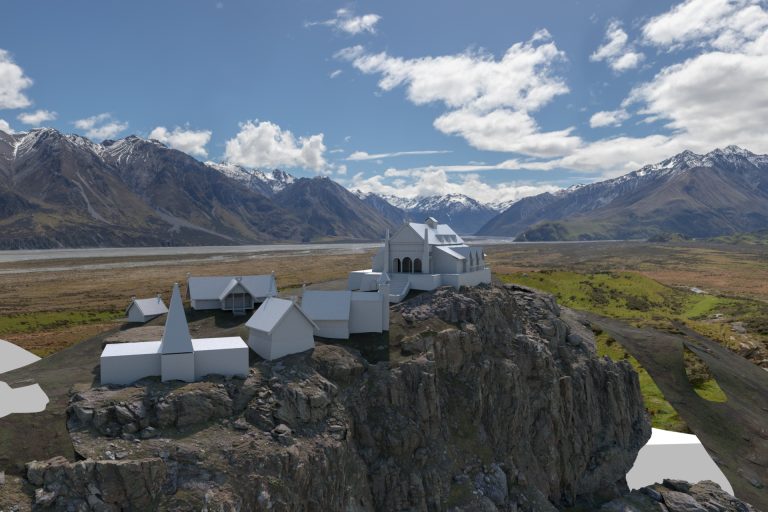
I’d like to branch out into doing more Environment Generalist work as well, so one of my current projects is recreating Edoras, an environment from Lord of the Rings – here, I’m learning about working with real-world terrain data, as well as matte-painting and camera projections…
What do you love most about your job?
I love the creativity and collaboration that comes with VFX. I’ve worked with some incredible artists over the years, who have inspired me, and hopefully we’ve all learned things from each other.
It’s also a pretty cool feeling to know that my work will sometimes be seen by millions of people all over the world. Hopefully they enjoy it (some films more than others, no doubt!) and it helps them to escape from the mundanity of everyday life, for an hour or two, the way the films I watched as a child did for me.
What advice would you give to someone who is preparing for their first job interview in VFX/modelling?
As everyone will tell you, go prepared with some questions to ask about the company, about the team and the projects you might be working on. Do some research on the company, find out what films they’ve worked on recently, and specifically which sequences, and try to watch at least some of them if you can. Then when you’re asked “So why would you like to come and work for us?”, you can speak authentically about the work they’ve done that you love, and show that you have a genuine interest in the company.
“Be prepared to talk about the work on your showreel; how you approached the challenging aspects of it, why you made certain creative decisions, and what you think you did well. Also be ready to talk about the things you could have done better on your reel, if you are asked; the things you’d like to revisit when you have time. Especially for junior roles, showing humility, an ability to self-criticise, and a willingness to improve is far better than believing your work is already perfect.”
Most of all, just try to be friendly and amenable in the interview – if you’ve made it to the interview stage, the interviewers are probably already satisfied with the quality of work on your reel. For them, the interview will be just as much about getting to know you as a person, your communication skills, and understanding how well you’d fit into the team.
What’s next for you?
That’s the difficult thing about freelancing – you never know where the next job is coming from. It’s been a challenging few years with Covid shutting down productions, followed by the writers’ and actors’ strikes. I’m certainly keen to take on some more roles in advertising, whilst the film industry is getting back on its feet.
In the meantime, I’ve got a lot of personal projects on the go, starting with building the rest of Middle-Earth, and I need to brush up on my Houdini skills as well. I’ve also entered the field of wedding photography, which is helping to pay the bills until the next VFX job comes along.